

Login
Language
Watches By Price
Watch Service
Accessories

GLASHÜTTE WATCHES vs. SWISS WATCHES
European watchmaking has always been shaped by two outstanding centers, Glashütte and Switzerland. Between them exists an exciting competition at the highest level, where technology, design, materials, and finishing often differ only in subtle nuances. On one side are manufacturers like A. Lange & Söhne, Glashütte Original, NOMOS Glashütte, and Mühle Glashütte, and on the other, renowned names like Patek Philippe, Vacheron Constantin, Jaeger LeCoultre, IWC Schaffhausen, Rolex, or Longines. They all embody masterful craftsmanship, timeless elegance, and timepieces that go far beyond their function as mere Watches.
Swiss watchmaking looks back on a centuries-old tradition, with roots reaching back to the 16th century when Huguenots brought watchmaking to Geneva. Glashütte, on the other hand, only began its rise in 1845 with Ferdinand Adolph Lange, which initiated the economic transformation of the Saxon region.
 Source: Unsplash 2026
Vivid history in comparison
Swiss watchmaking has a centuries-old tradition, with its origins in 16th century Geneva. Thanks to the Etablissage system, Switzerland early on developed into the world’s leading watchmaking center. In contrast, Glashütte began its rise only in 1845 with Ferdinand Adolph Lange, who laid the foundation for German fine watchmaking. Despite destruction, nationalization, and economic setbacks, an impressive renaissance occurred after 1990. While Switzerland stands for continuity and international prestige, Glashütte embodies artisanal precision, technical innovation, and a protected designation of origin for watchmaking at the highest level.
Technical competition at a high level
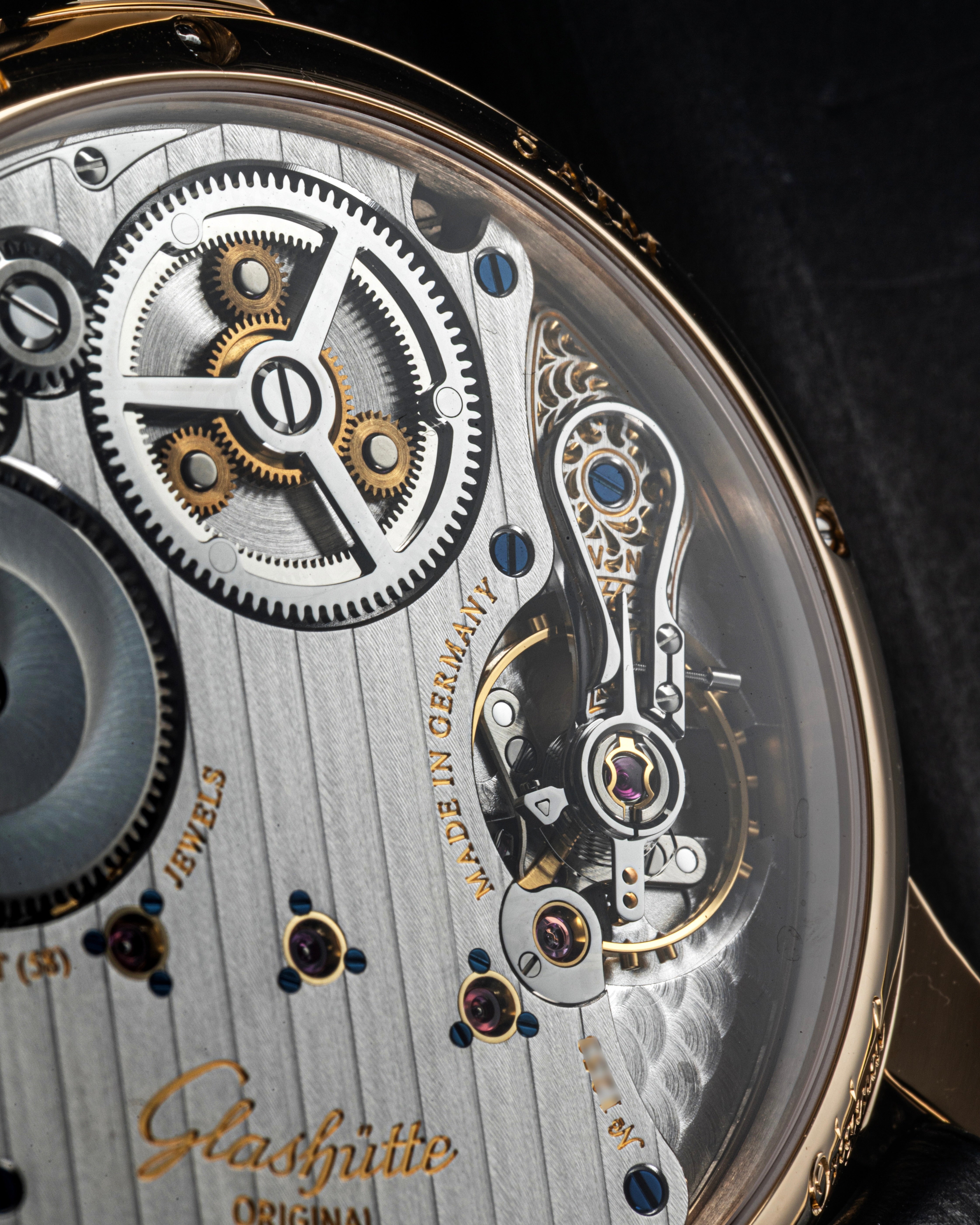
Switzerland stands for technological diversity and the highest industrial precision. Innovations such as silicon escapements, ultra-thin calibers, modern Chronographs, and anti-magnetic movements emphasize its worldwide leadership. In contrast, Glashütte relies on a distinctive watchmaking tradition with characteristic design features such as the three-quarter plate, the hand-engraved balance cock, the swan-neck fine adjustment, and the Glashütte stripe finish. While Switzerland drives technical innovations, Glashütte preserves its historical identity. The protected origin seal is granted only to Watches where at least 50 percent of the value creation of the movement takes place directly in Glashütte.
Technical innovation here and there
Switzerland has profoundly shaped horology with Breguet's Tourbillon (1801) for gravity compensation and the modern silicon balance spring (2001) for absolute magnetic resistance. Glashütte, in turn, shines through masterful Saxon designs: the three-quarter plate (1864) by Lange provides maximum stability to the gear train, while Alfred Helwig's flying tourbillon (1920) visually and technically refined the Swiss invention with a delicate, one-sided mounting.
Popular Brands from Glashütte
Glashütte represents some of the most renowned watch manufacturers in Germany. Each brand follows its own philosophy – from finest haute horlogerie to functional instrument watches to modern Bauhaus design.
A. Lange & Söhne
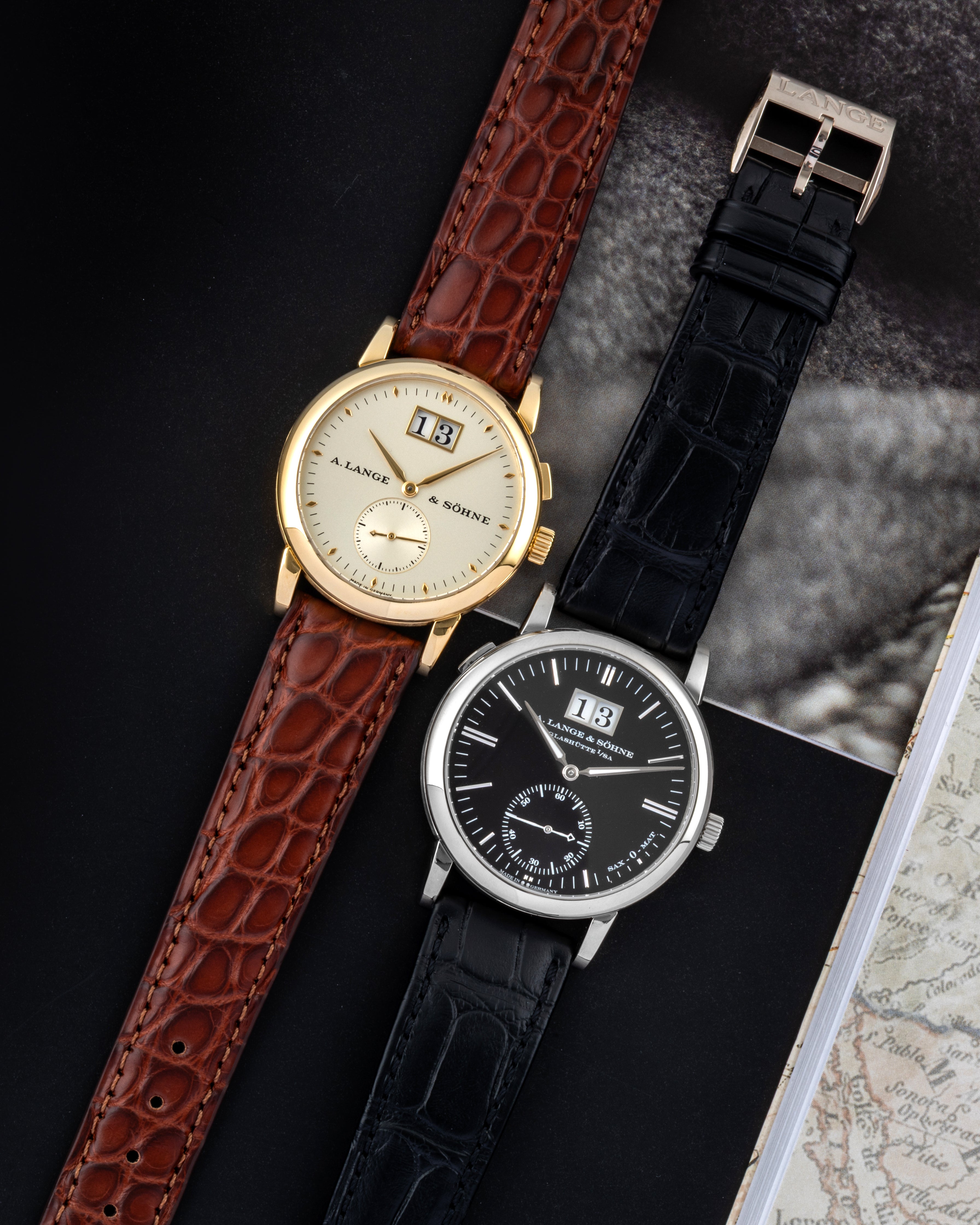
A. Lange & Söhne is considered by many connoisseurs to be one of the best watch manufacturers in the world. After expropriation, the traditional brand disappeared for decades before making a spectacular comeback in 1994 with the Lange 1. Today, models like the Lange 1, Datograph, Zeitwerk, and Odysseus enjoy cult status. Each watch stands for the highest precision, elaborate craftsmanship, and technical sophistication. Characteristic features such as the Glashütte three-quarter plate, hand-engraved balance cocks, and the double assembly of the movements make each watch a masterpiece of German watchmaking art and a coveted collector’s item.
Glashütte Original
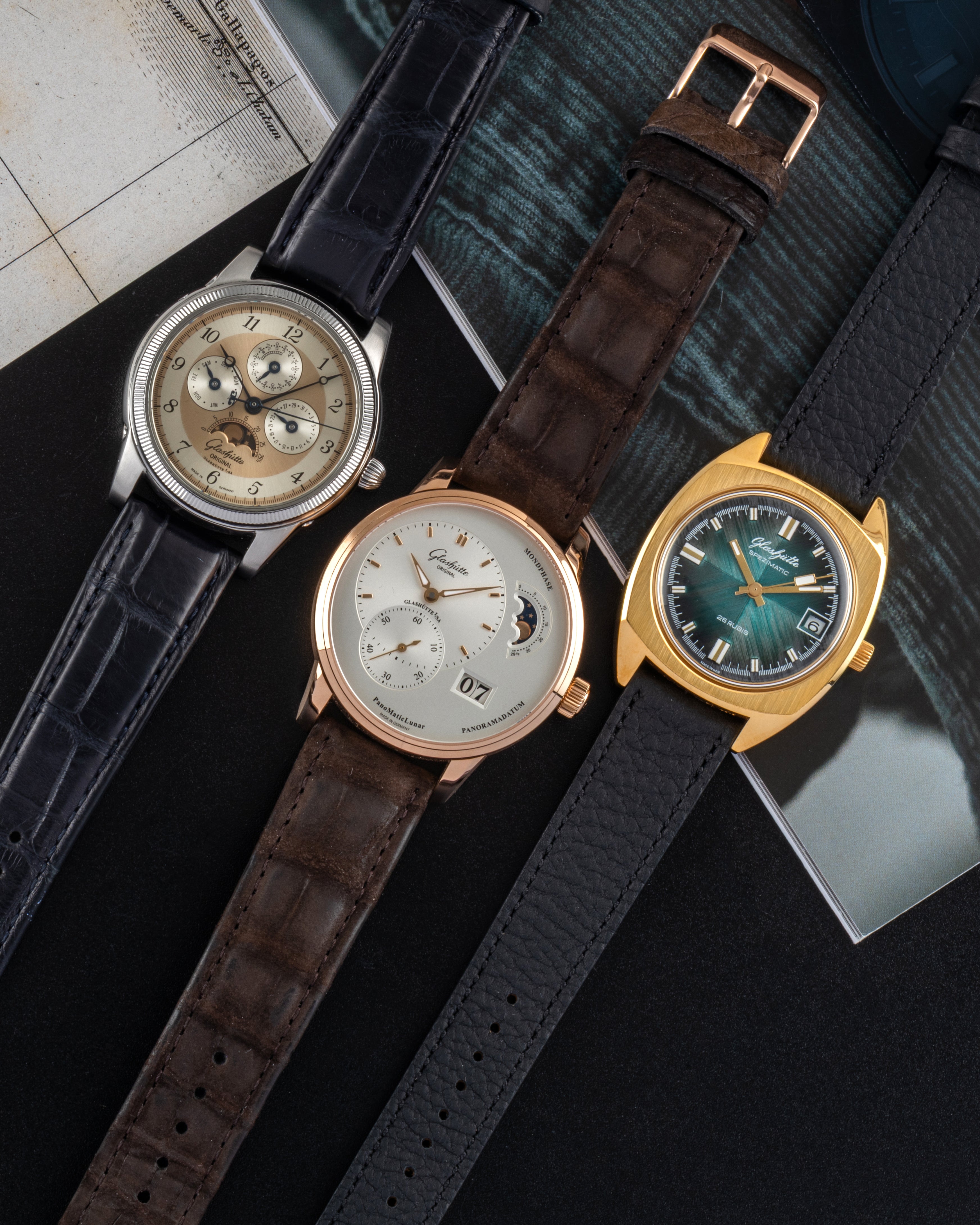
Glashütte Original is today one of the leading manufacturers of Haute Horlogerie, combining traditional watchmaking art with modern technology. Since its reestablishment in 1994, the brand has developed into an international flagship of German luxury Watches. Collections such as Senator, Pano, and SeaQ stand for timeless design, highest precision, and sophisticated complications. With in-house movements, the flying tourbillon developed by Alfred Helwig, and finest craftsmanship, each Watch embodies the long tradition of Glashütte watchmaking and the aspiration to unite technical perfection with elegant restraint.
NOMOS Glashütte
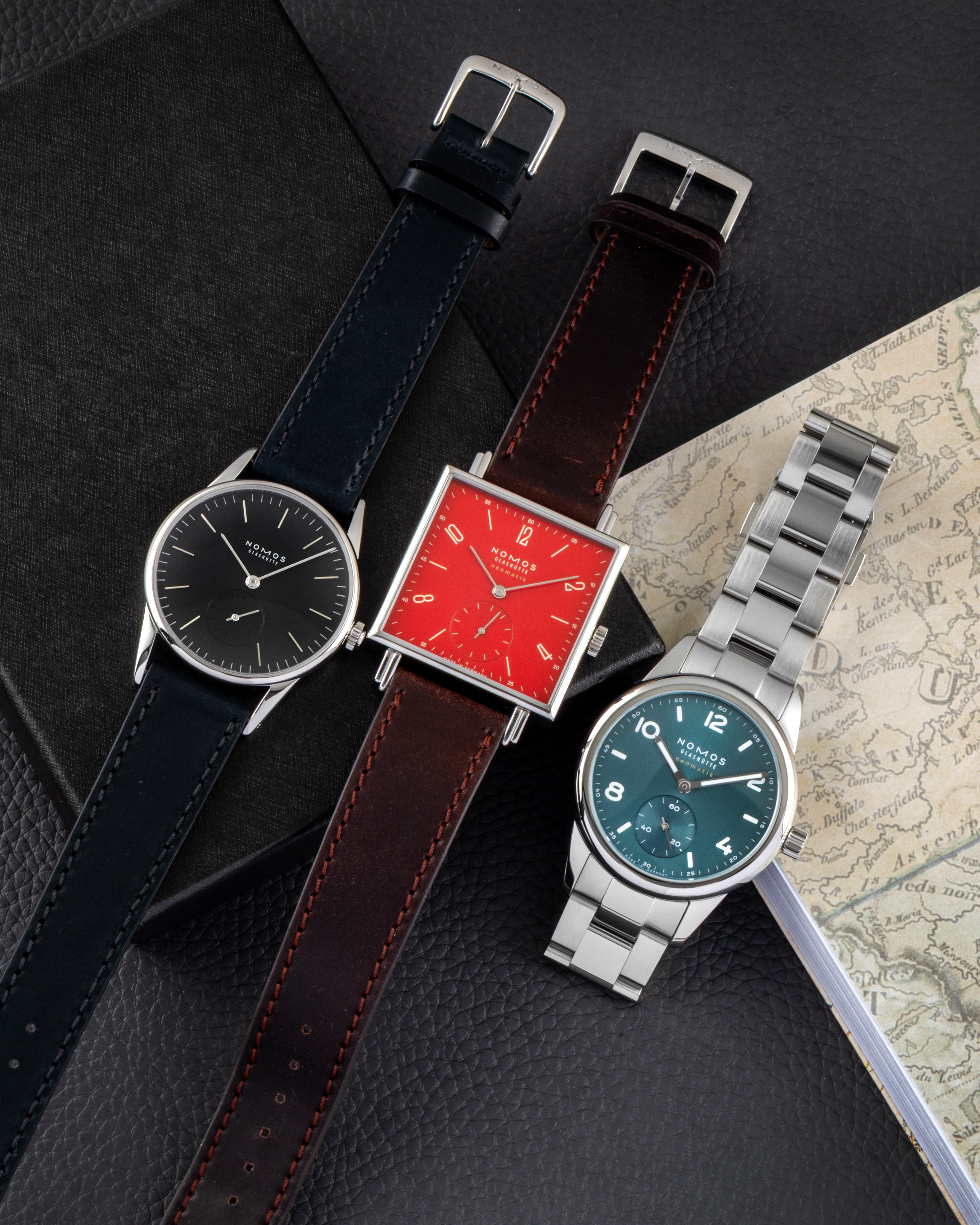
Despite being founded in 1990, NOMOS Glashütte is one of the most innovative German watch manufacturers. With an exceptionally high level of in-house production and its own Swing System, the brand develops and produces its movements almost entirely in Glashütte. Clear design, technical precision, and Bauhaus-inspired aesthetics characterize models like Tangente, Orion, Metro, and Ahoi. The distinctive Tetra and the elegant Lux also demonstrate the courage for independent design. In this way, NOMOS combines modern watchmaking art with Saxon tradition and has earned an excellent reputation worldwide.
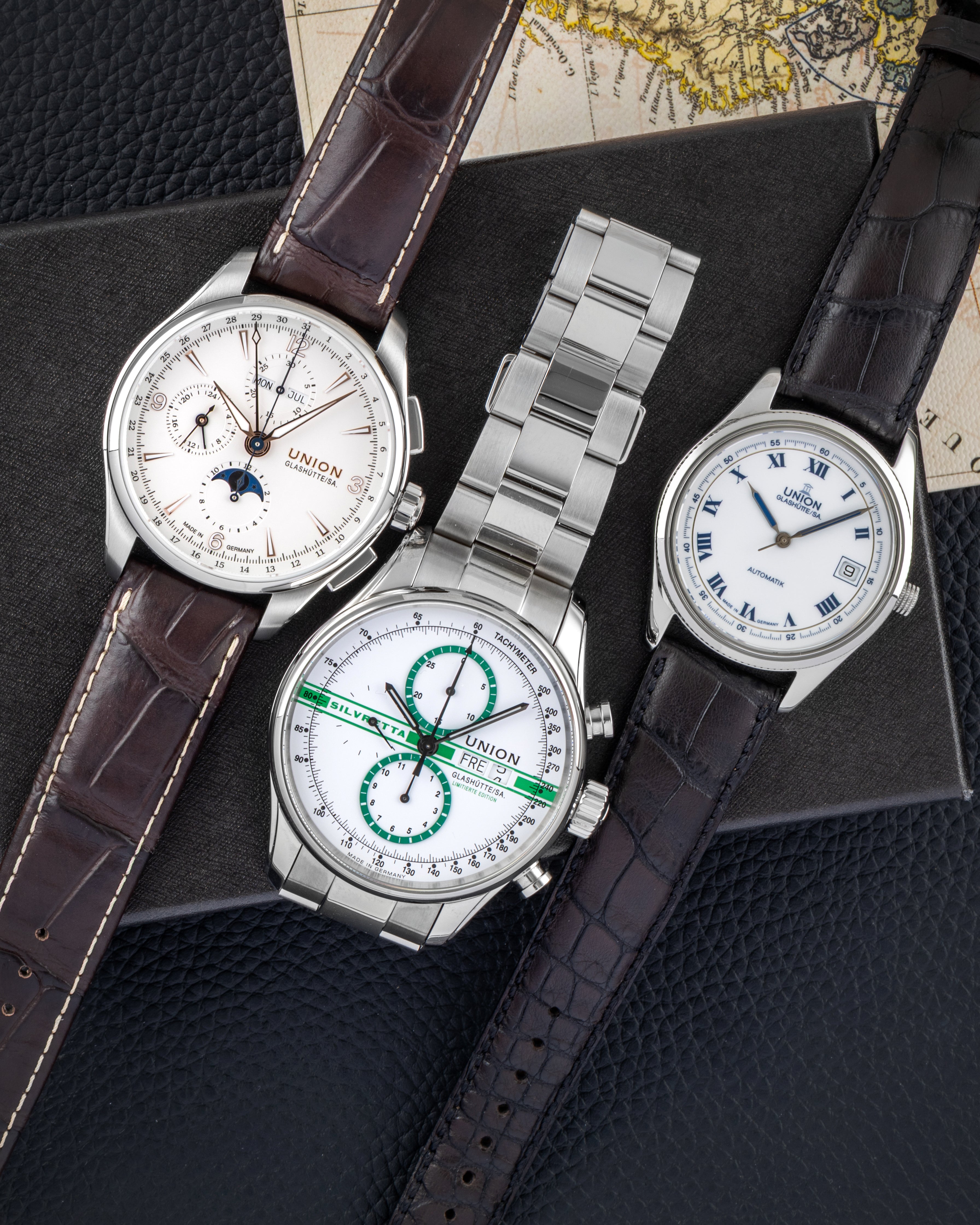
Union Glashütte
Since 1893, Union Glashütte has combined Saxon watchmaking craftsmanship with the commitment to offer high-quality timepieces at fair prices. After the historic restart in 1997, the brand has remained true to its philosophy and continues to rely exclusively on mechanical movements. Collections such as Belisar, Noramis, 1893, and Averin unite sporty dynamism, retro charm, and classic elegance. Through its involvement in renowned vintage car events, exclusive special models are regularly created. Thus, Union Glashütte combines traditional craftsmanship, technical quality, and distinctive design into authentic Watches with unmistakable personality.
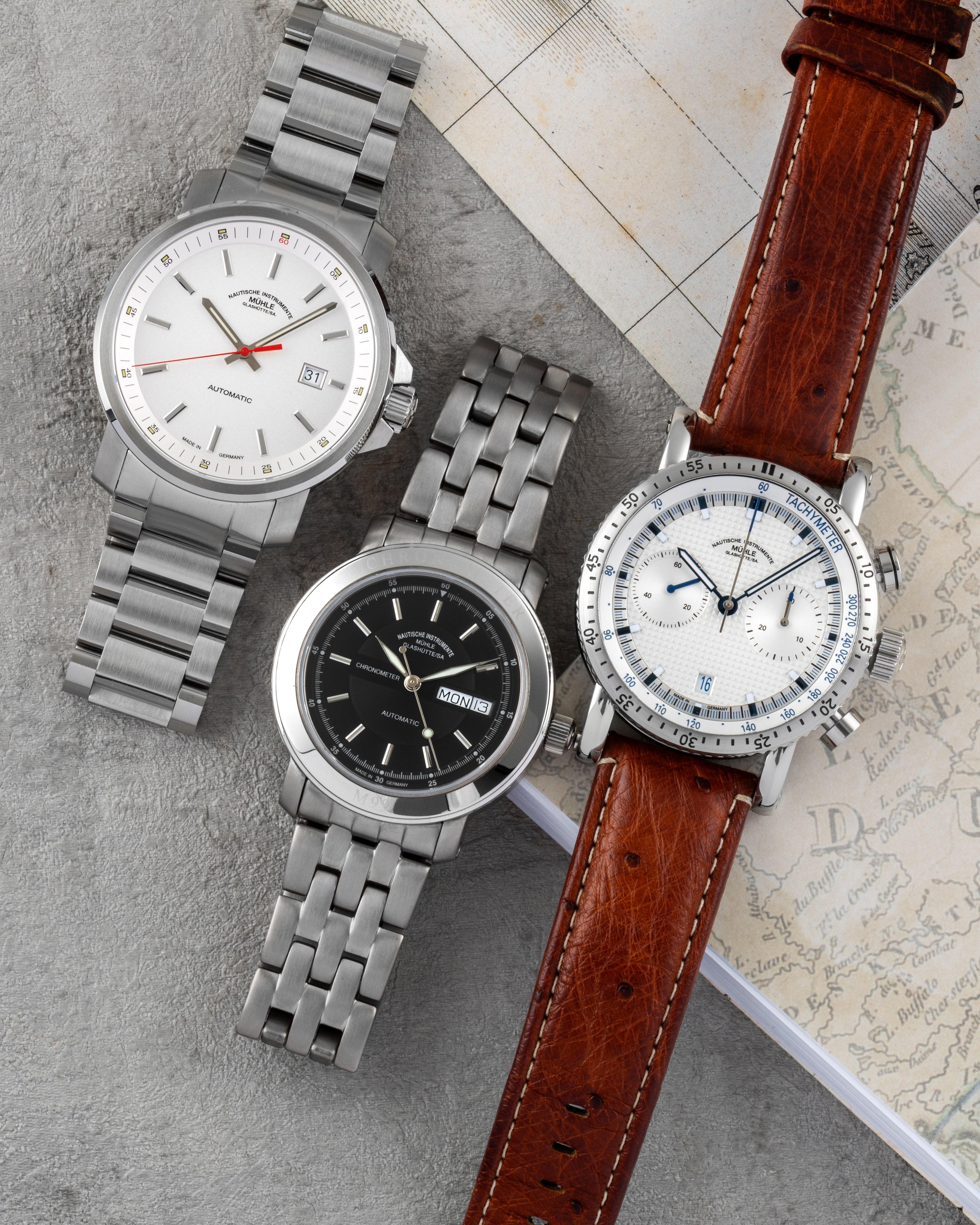
Mühle Glashütte
Mühle Glashütte has a history dating back to 1869 and remains family-owned by the fifth generation to this day. Originally a manufacturer of fine mechanical measuring instruments, it evolved into a renowned Watch manufactory whose timepieces stand for functionality and precision. The close collaboration with sea rescuers continues to shape the brand. Models like the S.A.R. Rescue Timer, the elegant Teutonia, or the minimalist 29er combine technical robustness with maritime tradition. Each Watch is understood as a reliable instrument for measuring time, not just a piece of jewelry.
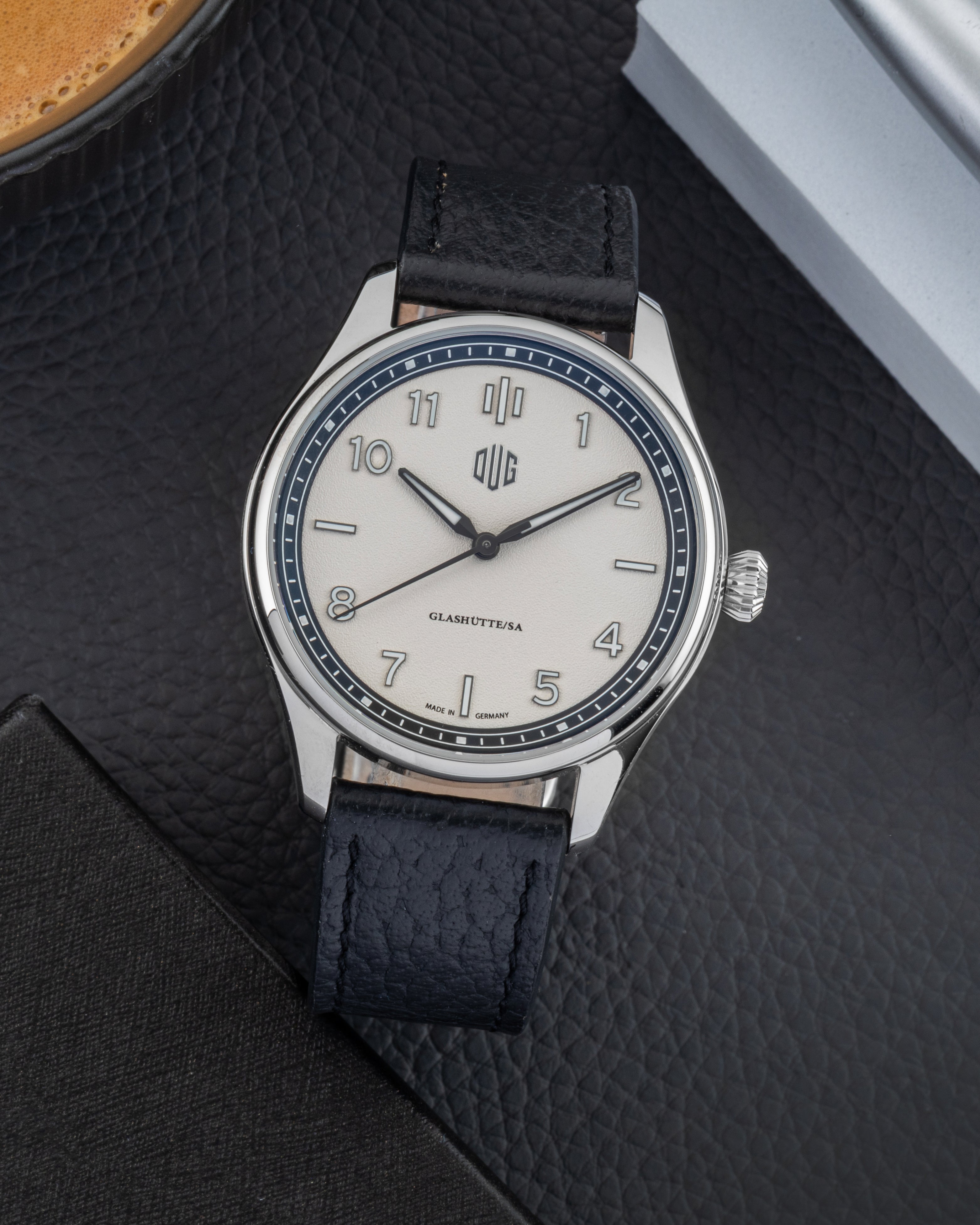
DUG Glashütte
The German watch manufacturer Glashütte attracted attention in 2004 with its appearance at the German Watch Museum, making high-quality Glashütte watchmaking accessible at attractive prices. The heart of the brand is traditional craftsmanship. The Swiss automatic movement is fully refined, regulated, and equipped with a proprietary rotor. Models like Purist Type 1, Purist Type 2, and Purist California Dial combine timeless design with high quality. Thanks to premium components and consistent direct sales, the manufacturer offers authentic Glashütte timepieces that especially delight collectors and discerning beginners.
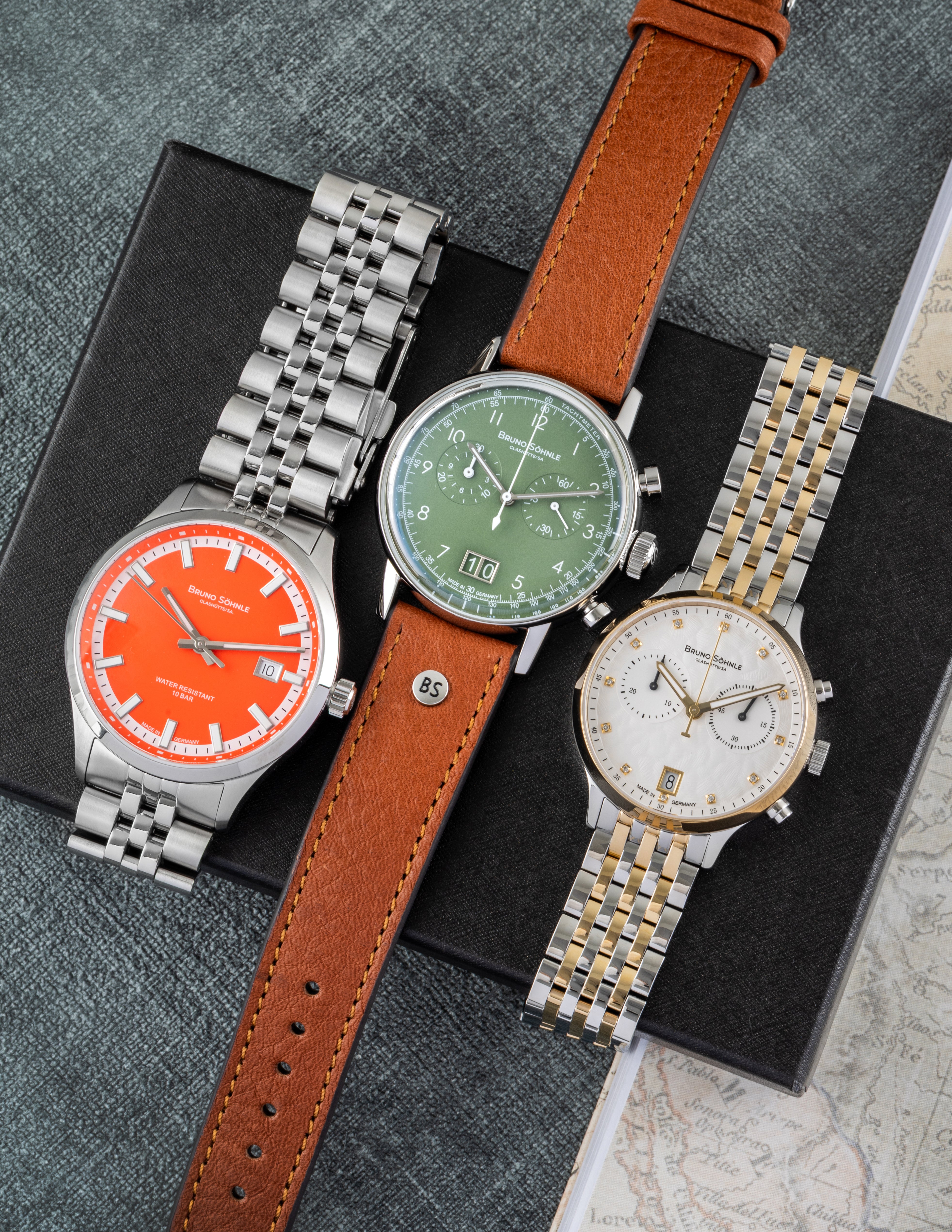
Bruno Söhnle
Since the year 2000, Bruno Söhnle has enriched the Glashütte watch scene with an independent concept. Instead of relying solely on mechanics, the brand combines elaborately refined quartz movements with high-quality mechanical calibers, making Glashütte quality accessible at attractive prices. Models like Pesaro, Rondo, Turin, or Merano stand for elegant design and high everyday practicality. The visible refinement of the movements, traditional craftsmanship, and modern manufacturing give each Watch its distinctive character. In this way, Bruno Söhnle uniquely combines innovation, precision, and Saxon watchmaking tradition.
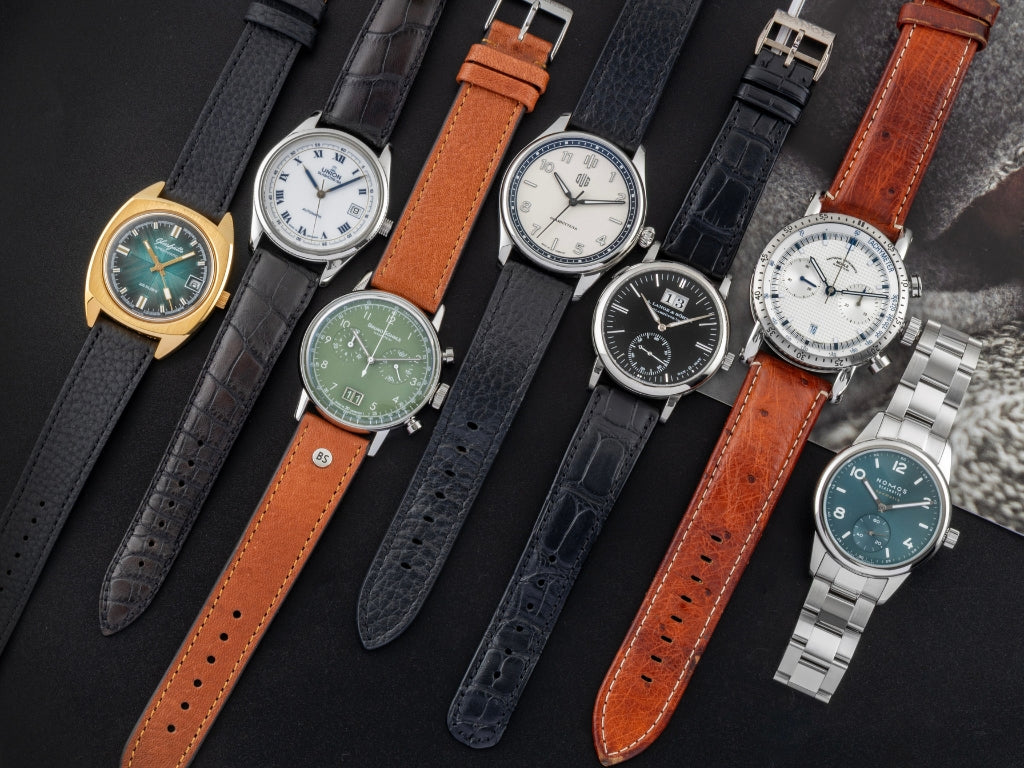
More Watches from Glashütte
Discover now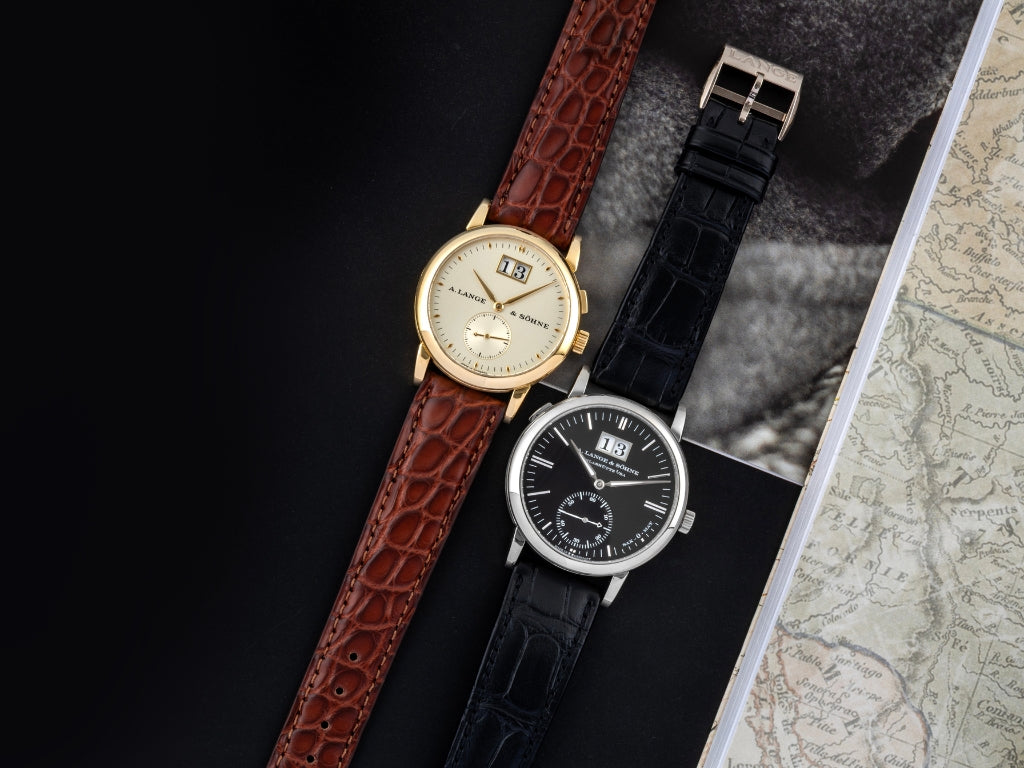
More knowledge about German watchmaking art & other brands
Read more