

Insight into the world of watch mechanics: Quartz vs. Mechanical watches

How do the functionalities of both types of watches differ?
Watches are not only practical timekeepers but also expressions of style, craftsmanship, and technical precision. Among the many types of watches, quartz and mechanical watches dominate the market. Their differences extend across design, functionality, and even the philosophy that drives them.
Quartz Watches: Electronic Precision
Quartz watches rely on the remarkable property of quartz crystals. A small quartz crystal, placed under tension, oscillates at a constant frequency. These oscillations are electronically measured and serve as the timekeeper for the watch. The electronics convert the oscillations into precise time measurements. This process makes quartz watches the most accurate timekeepers, with deviations of only a few seconds per month.
A characteristic feature of quartz watches is their simple operation and low maintenance requirements. A battery powers the movement, and the battery replacement occurs every 1-2 years. They are cheaper to manufacture, leading to affordable prices for a wide range of designs.
The Cartier Panthère is characterized not only by its functionality as a quartz watch but also by its timeless, minimalist, and angular design. Cartier uses high-quality materials for the Panthère, including stainless steel, yellow gold, rose gold, or – as seen in the photo – a combination of these materials.

Santos de Cartier is a famous watch collection from Cartier, first developed in 1904 for the Brazilian aviation pioneer A. Santos-Dumont. This watch is considered one of the first pilot watches in the world.
The model Formula 1 from Tag Heuer, inspired by the world of motorsports, is known for its sporty-elegant design. Besides automatic models, this watch is also available as a quartz watch.
Mechanical Watches: Precision through Movement
Mechanical watches, on the other hand, are a masterpiece of watchmaking and craftsmanship. Their drive is based on a mechanical movement, often powered by a spring. Only winding this spring in Automatic Watches or the movement of the wrist sets the mechanics in motion. Timekeeping is achieved through precise control of complex gears, levers, and springs in the movement.
The difference between Automatic Watches and mechanical watches lies in winding the mechanics: While purely mechanical watch models are operated by winding the spring via the crown (manual winding), Automatic Watches automatically wind through wrist movements. This happens as a rotor inside the watch case rotates and winds the watch.
Since especially mechanical watch types enjoy great popularity among watch enthusiasts, it is no surprise that these timeless classics receive particularly strong resonance. Here are a few models that belong to the Automatic Watches as well as manual winding watches:
Manual winding watches include, for example, the Omega Speedmaster Professional Moonwatch and the Nomos Tangente. The Nomos Tangente impresses with a modern, minimalist design and its own manual winding movement, while the Omega Speedmaster Moonwatch scores with its chronograph function and its historical significance as the first watch on the moon.

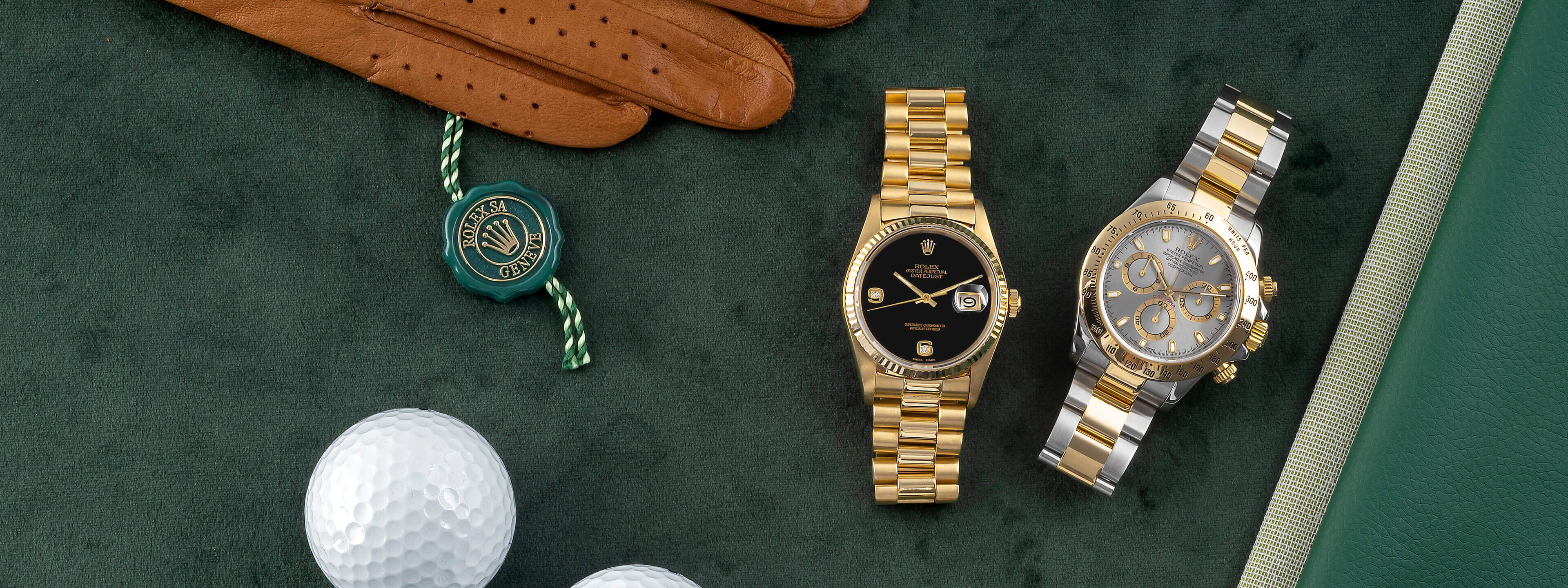
In terms of movement, they are both the same, yet the Rolex Datejust and the IWC Pilot are two watch models that differ mainly in their elegant design: The Rolex Datejust is characterized by timeless elegance and an automatic movement, while the IWC Pilot impresses with its distinctive pilot watch design and a high-quality automatic movement.
![Bruno Söhnle Glashütte Rondo steel quartz women's watch 17-13106-221 [2503434]](http://www.zeitauktion.com/cdn/shop/files/2503434_01_nowm.jpg?v=1751063818&width=2400)
![Bruno Söhnle Glashütte Rondo steel quartz women's watch 17-13106-221 [2503434]](http://www.zeitauktion.com/cdn/shop/files/2503434_02_2k.jpg?v=1750841807&width=2400)
![Bruno Söhnle Glashütte Merano gilt / steel quartz men's watch 17-33232-241 [2503443]](http://www.zeitauktion.com/cdn/shop/files/2503443_01_nowm.jpg?v=1751063830&width=2400)
![Bruno Söhnle Glashütte Merano gilt / steel quartz men's watch 17-33232-241 [2503443]](http://www.zeitauktion.com/cdn/shop/files/2503443_02_2k.jpg?v=1750839283&width=2400)
![Omega Constellation steel quartz men's watch 396.1060 [2504115]](http://www.zeitauktion.com/cdn/shop/files/2504115_01_nowm.jpg?v=1759318937&width=2400)
![Omega Constellation steel quartz men's watch 396.1060 [2504115]](http://www.zeitauktion.com/cdn/shop/files/2504115_02_2k.jpg?v=1759318939&width=2400)
![Omega Constellation steel quartz women's watch 1562.40.00 LP: 3200EUR [2504809]](http://www.zeitauktion.com/cdn/shop/files/2504809_01_nowm.jpg?v=1759122078&width=2400)
![Omega Constellation steel quartz women's watch 1562.40.00 LP: 3200EUR [2504809]](http://www.zeitauktion.com/cdn/shop/files/2504809_02_2k.jpg?v=1759122080&width=2400)
![Cartier Panthere steel quartz women's watch W25032P5 [2503690]](http://www.zeitauktion.com/cdn/shop/files/2503690_01_nowm.jpg?v=1753946907&width=2400)
![Cartier Panthere steel quartz women's watch W25032P5 [2503690]](http://www.zeitauktion.com/cdn/shop/files/2503690_02_2k.jpg?v=1753946909&width=2400)
![Omega Constellation steel / gold quartz unisex 196.0305 Vintage [2505338]](http://www.zeitauktion.com/cdn/shop/files/2505338_01_nowm.jpg?v=1759318524&width=2400)
![Omega Constellation steel / gold quartz unisex 196.0305 Vintage [2505338]](http://www.zeitauktion.com/cdn/shop/files/2505338_02_2k.jpg?v=1759318526&width=2400)
![Cartier Vendome silver-gilt quartz women's watch 84978213 [2503759]](http://www.zeitauktion.com/cdn/shop/files/2503759_01_nowm.jpg?v=1755783747&width=2400)
![Cartier Vendome silver-gilt quartz women's watch 84978213 [2503759]](http://www.zeitauktion.com/cdn/shop/files/2503759_02_2k.jpg?v=1755783749&width=2400)
![Omega Constellation steel quartz women's watch 131.10.28.60.60.002 LP: 4400EUR [2506558]](http://www.zeitauktion.com/cdn/shop/files/2506558_01_nowm.jpg?v=1763376558&width=2400)
![Omega Constellation steel quartz women's watch 131.10.28.60.60.002 LP: 4400EUR [2506558]](http://www.zeitauktion.com/cdn/shop/files/2506558_02_2k.jpg?v=1763376559&width=2400)
The accuracy of mechanical watches can be lower compared to quartz watches, with deviations of several seconds to minutes per week. Nevertheless, lovers of mechanical watches often appreciate these irregularities as part of the character and tradition of these watches. Often, mechanical watches have more complications than their quartz counterparts: stopwatch functions in chronographs, the date and a perpetual calendar, as well as a power reserve indicator and many more complications round off the functions beyond simple timekeeping.
Differences in Maintenance and Care
In terms of maintenance, quartz and mechanical watches also differ. Quartz watches require minimal care, while mechanical watches should be serviced and cleaned every few years. The latter are more susceptible to wear, but their timeless elegance and the craftsmanship that goes into their manufacture are priceless for many enthusiasts.
The Choice Is in the Eye of the Beholder: Classic Car or Electric Car?
The decision between quartz and mechanical watches depends on individual preferences, budget, and the desired area of use. Quartz watches offer precision and user-friendliness at an affordable price, while mechanical watches impress with their complexity, craftsmanship, and the romantic ticking of the mechanics.
Whether one chooses the razor-sharp precision of quartz technology or the mechanical masterpiece is ultimately a question of personal style and appreciation for the art of timekeeping. In a world shaped by technology, mechanical watches preserve the heritage of watchmaking and remind us that time is often more than just numbers on a dial.
The choice between a quartz or mechanical watch is therefore in the eye of the beholder and strongly depends on individual care: So what type are you? Do you metaphorically prefer the choice of an efficient, modern electric car that is reliable and low-maintenance or a classic car that requires more care but impresses with its timeless design and handcrafted precision?
About the author

![Breitling Super Avenger II chronograph steel automatic men's watch A13371 [2504308]](http://www.zeitauktion.com/cdn/shop/files/2504308_01_nowm.jpg?v=1758641308&width=2400)
![Breitling Super Avenger II chronograph steel automatic men's watch A13371 [2504308]](http://www.zeitauktion.com/cdn/shop/files/2504308_02_2k.jpg?v=1758641309&width=2400)
![Omega Seamaster steel automatic men's watch 210.30.42.20.04.001 LP: 6500EUR [2505117]](http://www.zeitauktion.com/cdn/shop/files/2505117_01_nowm.jpg?v=1759122880&width=2400)
![Omega Seamaster steel automatic men's watch 210.30.42.20.04.001 LP: 6500EUR [2505117]](http://www.zeitauktion.com/cdn/shop/files/2505117_02_2k.jpg?v=1759122882&width=2400)
![IWC Aquatimer chronograph steel automatic men's watch IW371928 [2502693]](http://www.zeitauktion.com/cdn/shop/files/2502693_01_nowm.jpg?v=1760333709&width=2400)
![IWC Aquatimer chronograph steel automatic men's watch IW371928 [2502693]](http://www.zeitauktion.com/cdn/shop/files/2502693_02_2k.jpg?v=1760333711&width=2400)
![Tudor Prince Oysterdate steel / white gold automatic men's watch 74034 [2506609]](http://www.zeitauktion.com/cdn/shop/files/2506609_01_nowm.jpg?v=1764248191&width=2400)
![Tudor Prince Oysterdate steel / white gold automatic men's watch 74034 [2506609]](http://www.zeitauktion.com/cdn/shop/files/2506609_02_2k.jpg?v=1764248193&width=2400)
![Rolex Datejust steel / white gold automatic men's watch 16234 [2506505]](http://www.zeitauktion.com/cdn/shop/files/2506505_01_nowm.jpg?v=1763115272&width=2400)
![Rolex Datejust steel / white gold automatic men's watch 16234 [2506505]](http://www.zeitauktion.com/cdn/shop/files/2506505_02_2k.jpg?v=1763115273&width=2400)
![Zenith Chronomaster chronograph steel automatic men's watch 03.3300.3604/21.C822 LP: 10100EUR [2505595]](http://www.zeitauktion.com/cdn/shop/files/2505595_01_nowm.jpg?v=1760362996&width=2400)
![Zenith Chronomaster chronograph steel automatic men's watch 03.3300.3604/21.C822 LP: 10100EUR [2505595]](http://www.zeitauktion.com/cdn/shop/files/2505595_02_2k.jpg?v=1760362997&width=2400)
![Rolex Date 18 ct gold automatic women's watch 6624 Vintage [2501767]](http://www.zeitauktion.com/cdn/shop/files/2501767_01_nowm.jpg?v=1753174570&width=2400)
![Rolex Date 18 ct gold automatic women's watch 6624 Vintage [2501767]](http://www.zeitauktion.com/cdn/shop/files/2501767_02_2k.jpg?v=1753174572&width=2400)
![Rolex Submariner steel automatic men's watch 16610 [2506556]](http://www.zeitauktion.com/cdn/shop/files/2506556_01_nowm.jpg?v=1764855309&width=2400)
![Rolex Submariner steel automatic men's watch 16610 [2506556]](http://www.zeitauktion.com/cdn/shop/files/2506556_02_2k.jpg?v=1764855311&width=2400)
![IWC Portofino chronograph steel automatic men's watch IW378303 [2505749]](http://www.zeitauktion.com/cdn/shop/files/2505749_01_nowm.jpg?v=1760697310&width=2400)
![IWC Portofino chronograph steel automatic men's watch IW378303 [2505749]](http://www.zeitauktion.com/cdn/shop/files/2505749_02_2k.jpg?v=1760697312&width=2400)
![Rolex Sea-Dweller steel automatic men's watch 116660 [2506649]](http://www.zeitauktion.com/cdn/shop/files/2506649_01_nowm.jpg?v=1764856815&width=2400)
![Rolex Sea-Dweller steel automatic men's watch 116660 [2506649]](http://www.zeitauktion.com/cdn/shop/files/2506649_02_2k.jpg?v=1764856817&width=2400)
![IWC Portugieser chronograph steel automatic men's watch IW371447 LP: 9100EUR [2505905]](http://www.zeitauktion.com/cdn/shop/files/2505905_01_nowm.jpg?v=1762520413&width=2400)
![IWC Portugieser chronograph steel automatic men's watch IW371447 LP: 9100EUR [2505905]](http://www.zeitauktion.com/cdn/shop/files/2505905_02_2k.jpg?v=1762520414&width=2400)
![Breitling Navitimer chronograph steel automatic men's watch AB0117131C1A1 [2503494]](http://www.zeitauktion.com/cdn/shop/files/2503494_01_nowm.jpg?v=1754034966&width=2400)
![Breitling Navitimer chronograph steel automatic men's watch AB0117131C1A1 [2503494]](http://www.zeitauktion.com/cdn/shop/files/2503494_02_2k.jpg?v=1754034968&width=2400)



![Cartier Tortue 18 ct gold automatic men's watch CRW1548151, W1548151 LP: 173000EUR Limited [2505652]](http://www.zeitauktion.com/cdn/shop/files/2505652_01_nowm.jpg?v=1758869768&width=2400)
![Cartier Tortue 18 ct gold automatic men's watch CRW1548151, W1548151 LP: 173000EUR Limited [2505652]](http://www.zeitauktion.com/cdn/shop/files/2505652_02_2k.jpg?v=1758869770&width=2400)
![Glashütte Seventies chronograph steel automatic men's watch 1-37-02-10-02-63 Limited [2504258]](http://www.zeitauktion.com/cdn/shop/files/2504258_01_nowm.jpg?v=1753685795&width=2400)
![Glashütte Seventies chronograph steel automatic men's watch 1-37-02-10-02-63 Limited [2504258]](http://www.zeitauktion.com/cdn/shop/files/2504258_02_2k.jpg?v=1753685797&width=2400)
![Blancpain Air Command chronograph steel automatic men's watch AC01-1130 LP: 22900EUR Limited [2500814]](http://www.zeitauktion.com/cdn/shop/files/2500814_01_nowm.jpg?v=1751059720&width=2400)
![Blancpain Air Command chronograph steel automatic men's watch AC01-1130 LP: 22900EUR Limited [2500814]](http://www.zeitauktion.com/cdn/shop/files/2500814_02_2k.jpg?v=1747381629&width=2400)
![Rolex Day-Date 18 ct gold automatic men's watch 6611B Vintage [2506820]](http://www.zeitauktion.com/cdn/shop/files/2506820_01_nowm.jpg?v=1764854075&width=2400)
![Rolex Day-Date 18 ct gold automatic men's watch 6611B Vintage [2506820]](http://www.zeitauktion.com/cdn/shop/files/2506820_02_2k.jpg?v=1764854502&width=2400)
![Hublot Classic Fusion chronograph ceramic / titanium automatic men's watch 521.NC.0589.VR.OPX14 Limited [2506399]](http://www.zeitauktion.com/cdn/shop/files/2506399_01_nowm.jpg?v=1762767787&width=2400)
![Hublot Classic Fusion chronograph ceramic / titanium automatic men's watch 521.NC.0589.VR.OPX14 Limited [2506399]](http://www.zeitauktion.com/cdn/shop/files/2506399_02_2k.jpg?v=1762767789&width=2400)
![Blancpain Leman 18 ct red gold automatic men's watch 3563-3642 Limited [2506482]](http://www.zeitauktion.com/cdn/shop/files/2506482_01_nowm.jpg?v=1764768132&width=2400)
![Blancpain Leman 18 ct red gold automatic men's watch 3563-3642 Limited [2506482]](http://www.zeitauktion.com/cdn/shop/files/2506482_02_2k.jpg?v=1764768134&width=2400)
![Tag Heuer Monaco chronograph steel automatic men's watch CAW211W.FC6467 Limited [2506996]](http://www.zeitauktion.com/cdn/shop/files/2506996_01_nowm.jpg?v=1764940908&width=2400)
![Tag Heuer Monaco chronograph steel automatic men's watch CAW211W.FC6467 Limited [2506996]](http://www.zeitauktion.com/cdn/shop/files/2506996_02_2k.jpg?v=1764940910&width=2400)
![Tag Heuer Monaco chronograph carbon automatic men's watch CAW2190.FC6437 Limited [2506994]](http://www.zeitauktion.com/cdn/shop/files/2506994_01_nowm.jpg?v=1764945738&width=2400)
![Tag Heuer Monaco chronograph carbon automatic men's watch CAW2190.FC6437 Limited [2506994]](http://www.zeitauktion.com/cdn/shop/files/2506994_02_2k.jpg?v=1764945740&width=2400)
![Panerai Radiomir steel manual winding men's watch PAM00736 Limited [2503556]](http://www.zeitauktion.com/cdn/shop/files/2503556_01_nowm.jpg?v=1752059716&width=2400)
![Panerai Radiomir steel manual winding men's watch PAM00736 Limited [2503556]](http://www.zeitauktion.com/cdn/shop/files/2503556_02_2k.jpg?v=1752059718&width=2400)


Leave a comment
This site is protected by hCaptcha and the hCaptcha Privacy Policy and Terms of Service apply.