

Sapphire glass for luxury watches: What you need to know about it

Anyone who deals intensively with luxury watches will definitely have come into contact with sapphire crystal. It has high mechanical strength, thermal stability, and is considered extremely scratch-resistant. There are hardly better conditions for preserving a high-quality wristwatch. But what exactly is sapphire crystal and how is it made?
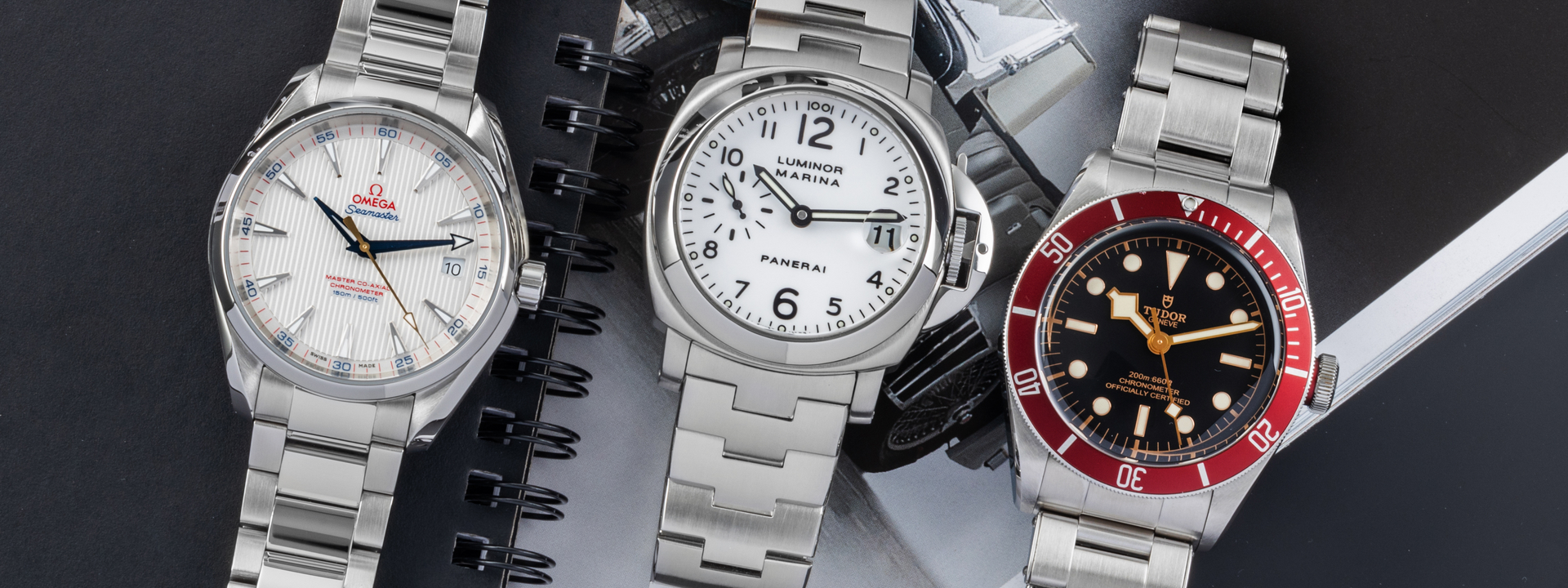
Watch enthusiasts and collectors have most likely already encountered sapphire crystal in the past. High-quality processed luxury watches from well-known brands often feature a watch crystal made of sapphire crystal, and selected models even have a case back made from this material.
Properties of sapphire crystal
Why do so many brands rely on sapphire crystal? This is mainly due to the positive properties that sapphire crystal combines. Equipped with high mechanical strength, high thermal stability, chemically neutral, extremely scratch-resistant, and non-porous, sapphire crystal is perfect for manufacturing luxury watches and preserving optical quality over decades.
In terms of hardness, sapphire crystal has 1800 to 2200 Vickers. In comparison, stainless steel only reaches about 200 Vickers.

What is sapphire crystal?
Contrary to what the name suggests, sapphire crystal is by no means glass nor does it have anything to do with the gemstone "sapphire", famous for its blue color. There is one similarity, however, since the gemstone "sapphire" is a type of corundum. Sapphire crystal is made of white corundum, which is synthetically produced. It is an exact replica of natural corundum in terms of chemical composition and properties.
Red corundum, the basis of the legendary ruby, is also synthetically produced to manufacture inexpensive jewels for the Movement.
Two different processes can be used to manufacture sapphire crystal. Either the Verneuil process (named after Professor Auguste Verneuil) or the EFG process (edge-defined film-fed growth). Both processes require high specialization and special manufacturing, from which watch crystals for the most renowned brands are created.
About the author

Riko
Further recommendations
![Rolex Datejust steel / gold automatic men's watch 16233 [2603534]](http://www.zeitauktion.com/cdn/shop/files/2603534_01_nowm.jpg?v=1781776569&width=2400)
![Rolex Datejust steel / gold automatic men's watch 16233 [2603534]](http://www.zeitauktion.com/cdn/shop/files/2603534_02_2k.jpg?v=1781776570&width=2400)
![Rolex Oyster Perpetual steel automatic men's watch 114200 [2603471]](http://www.zeitauktion.com/cdn/shop/files/2603471_01_nowm.jpg?v=1781776168&width=2400)
![Rolex Oyster Perpetual steel automatic men's watch 114200 [2603471]](http://www.zeitauktion.com/cdn/shop/files/2603471_02_2k.jpg?v=1781776168&width=2400)
![Breitling Chronomat chronograph steel / gold automatic men's watch B13352 [2603218]](http://www.zeitauktion.com/cdn/shop/files/2603218_01_nowm.jpg?v=1781782552&width=2400)
![Breitling Chronomat chronograph steel / gold automatic men's watch B13352 [2603218]](http://www.zeitauktion.com/cdn/shop/files/2603218_02_2k.jpg?v=1781782553&width=2400)
![IWC Portofino steel automatic men's watch IW356502 [2603477]](http://www.zeitauktion.com/cdn/shop/files/2603477_01_nowm.jpg?v=1781777266&width=2400)
![IWC Portofino steel automatic men's watch IW356502 [2603477]](http://www.zeitauktion.com/cdn/shop/files/2603477_02_2k.jpg?v=1781777268&width=2400)
![Rolex Datejust steel automatic women's watch 278240 [2603747]](http://www.zeitauktion.com/cdn/shop/files/2603747_01_nowm.jpg?v=1781776587&width=2400)
![Rolex Datejust steel automatic women's watch 278240 [2603747]](http://www.zeitauktion.com/cdn/shop/files/2603747_02_2k.jpg?v=1781776589&width=2400)
![Breitling Superocean chronograph steel automatic men's watch A23320 [2603509]](http://www.zeitauktion.com/cdn/shop/files/2603509_01_nowm.jpg?v=1781778918&width=2400)
![Breitling Superocean chronograph steel automatic men's watch A23320 [2603509]](http://www.zeitauktion.com/cdn/shop/files/2603509_02_2k.jpg?v=1781778919&width=2400)
![Omega De Ville chronograph steel / gold manual winding unisex 4340.31.00 Vintage [2603554]](http://www.zeitauktion.com/cdn/shop/files/2603554_01_nowm.jpg?v=1781702917&width=2400)
![Omega De Ville chronograph steel / gold manual winding unisex 4340.31.00 Vintage [2603554]](http://www.zeitauktion.com/cdn/shop/files/2603554_02_2k.jpg?v=1781702919&width=2400)
![Ebel Sportwave chronograph steel quartz men's watch E9251K51 [2603414]](http://www.zeitauktion.com/cdn/shop/files/2603414_01_nowm.jpg?v=1781702062&width=2400)
![Ebel Sportwave chronograph steel quartz men's watch E9251K51 [2603414]](http://www.zeitauktion.com/cdn/shop/files/2603414_02_2k.jpg?v=1781702063&width=2400)
![Breitling Superocean chronograph steel automatic men's watch A13313161C1S1 [2603207]](http://www.zeitauktion.com/cdn/shop/files/2603207_01_nowm.jpg?v=1781764946&width=2400)
![Breitling Superocean chronograph steel automatic men's watch A13313161C1S1 [2603207]](http://www.zeitauktion.com/cdn/shop/files/2603207_02_2k.jpg?v=1781764947&width=2400)
![Breitling Cockpit steel / gold quartz women's watch b71356 [2603556]](http://www.zeitauktion.com/cdn/shop/files/2603556_01_nowm.jpg?v=1781703329&width=2400)
![Breitling Cockpit steel / gold quartz women's watch b71356 [2603556]](http://www.zeitauktion.com/cdn/shop/files/2603556_02_2k.jpg?v=1781703330&width=2400)
![Rolex Datejust steel / white gold automatic men's watch 16234 [2602874]](http://www.zeitauktion.com/cdn/shop/files/2602874_01_nowm.jpg?v=1781774505&width=2400)
![Rolex Datejust steel / white gold automatic men's watch 16234 [2602874]](http://www.zeitauktion.com/cdn/shop/files/2602874_02_2k.jpg?v=1781774506&width=2400)
![Cartier Tank steel quartz men's watch W1016055 [2603270]](http://www.zeitauktion.com/cdn/shop/files/2603270_01_nowm.jpg?v=1781772984&width=2400)
![Cartier Tank steel quartz men's watch W1016055 [2603270]](http://www.zeitauktion.com/cdn/shop/files/2603270_02_2k.jpg?v=1781772986&width=2400)


![Cartier Tortue 18 ct gold automatic men's watch CRW1548151, W1548151 LP: 173000EUR Limited [2505652]](http://www.zeitauktion.com/cdn/shop/files/2505652_01_nowm.jpg?v=1758869768&width=2400)
![Cartier Tortue 18 ct gold automatic men's watch CRW1548151, W1548151 LP: 173000EUR Limited [2505652]](http://www.zeitauktion.com/cdn/shop/files/2505652_02_2k.jpg?v=1758869770&width=2400)
![Rolex Daytona chronograph 18 ct gold automatic men's watch 116518 [2601383]](http://www.zeitauktion.com/cdn/shop/files/2601383_01_nowm.jpg?v=1774434497&width=2400)
![Rolex Daytona chronograph 18 ct gold automatic men's watch 116518 [2601383]](http://www.zeitauktion.com/cdn/shop/files/2601383_02_2k.jpg?v=1774434499&width=2400)
![Rolex Daytona chronograph 18 ct gold automatic men's watch 16518 [2601382]](http://www.zeitauktion.com/cdn/shop/files/2601382_01_nowm.jpg?v=1774434115&width=2400)
![Rolex Daytona chronograph 18 ct gold automatic men's watch 16518 [2601382]](http://www.zeitauktion.com/cdn/shop/files/2601382_02_2k.jpg?v=1774434116&width=2400)
![A. Lange & Söhne Langematik 18 ct white gold automatic men's watch 308.027 [2602215]](http://www.zeitauktion.com/cdn/shop/files/2602215_01_nowm.jpg?v=1778509717&width=2400)
![A. Lange & Söhne Langematik 18 ct white gold automatic men's watch 308.027 [2602215]](http://www.zeitauktion.com/cdn/shop/files/2602215_02_2k.jpg?v=1778509719&width=2400)
![Audemars Piguet Royal Oak ceramic / titanium automatic men's watch 26405CE.OOA002CA.01 LP: 54400EUR [2601219]](http://www.zeitauktion.com/cdn/shop/files/2601219_01_nowm.jpg?v=1773055717&width=2400)
![Audemars Piguet Royal Oak ceramic / titanium automatic men's watch 26405CE.OOA002CA.01 LP: 54400EUR [2601219]](http://www.zeitauktion.com/cdn/shop/files/2601219_02_2k.jpg?v=1773055719&width=2400)
![A. Lange & Söhne Saxonia platinium manual winding unisex 105.025 [2506602]](http://www.zeitauktion.com/cdn/shop/files/2506602_01_nowm.jpg?v=1763120149&width=2400)
![A. Lange & Söhne Saxonia platinium manual winding unisex 105.025 [2506602]](http://www.zeitauktion.com/cdn/shop/files/2506602_02_2k.jpg?v=1763120150&width=2400)
![Patek Philippe Calatrava 18 ct white gold automatic men's watch 5296G-010 LP: 43802EUR [2602775]](http://www.zeitauktion.com/cdn/shop/files/2602775_01_nowm.jpg?v=1779446979&width=2400)
![Patek Philippe Calatrava 18 ct white gold automatic men's watch 5296G-010 LP: 43802EUR [2602775]](http://www.zeitauktion.com/cdn/shop/files/2602775_02_2k.jpg?v=1779446981&width=2400)
![Audemars Piguet Royal Oak chronograph steel automatic men's watch 26703ST.OO.A027CA.01 [2600525]](http://www.zeitauktion.com/cdn/shop/files/2600525_01_nowm.jpg?v=1778241377&width=2400)
![Audemars Piguet Royal Oak chronograph steel automatic men's watch 26703ST.OO.A027CA.01 [2600525]](http://www.zeitauktion.com/cdn/shop/files/2600525_02_2k.jpg?v=1778241379&width=2400)
![Vacheron & Constantin Overseas steel automatic men's watch 4500V/110A-B126 LP: 27900EUR [2602956]](http://www.zeitauktion.com/cdn/shop/files/2602956_01_nowm.jpg?v=1779888914&width=2400)
![Vacheron & Constantin Overseas steel automatic men's watch 4500V/110A-B126 LP: 27900EUR [2602956]](http://www.zeitauktion.com/cdn/shop/files/2602956_02_2k.jpg?v=1779888915&width=2400)